
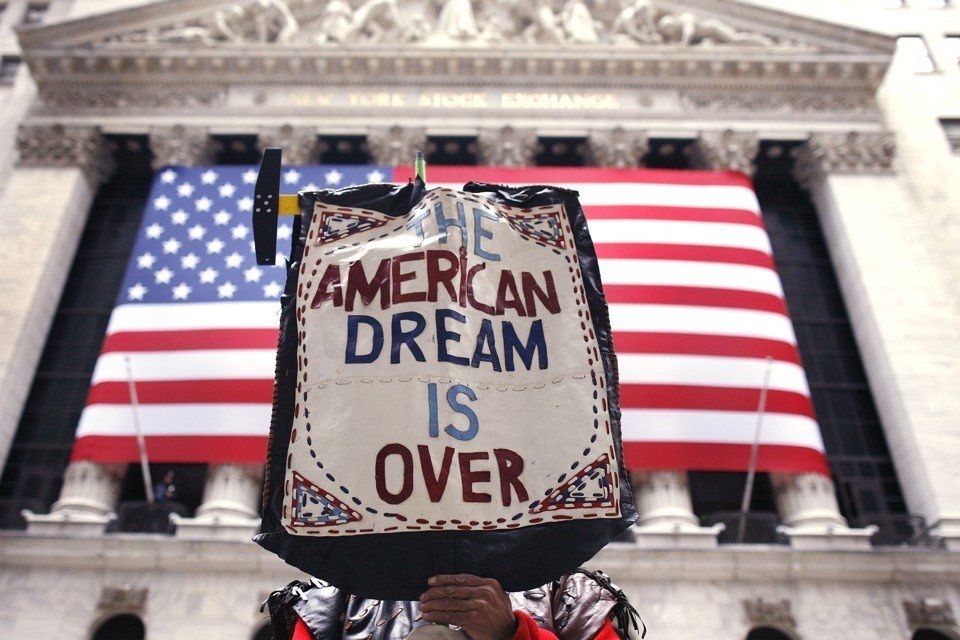
For generations, the United States has been celebrated as a land of freedom and opportunity, a place where anyone, regardless of their background, can achieve their dreams. This portrayal has been a beacon of hope for millions around the world, prompting countless individuals to leave their home countries in search of a better life. However, upon arrival, many are confronted with a reality starkly different from the idealized version of America they envisioned—one where the healthcare system presents not freedom, but chains.
The Myth of Healthcare Freedom
In theory, America offers cutting-edge medical technologies and treatments that are the envy of the world. In practice, however, accessing these treatments can be prohibitively expensive, leaving new arrivals and long-standing citizens alike struggling to afford basic healthcare needs. The freedom to choose from the best medical options is only available to those who can pay the exorbitant prices that the U.S. healthcare system demands (Patients For Affordable Drugs Now) (Harvard Public Health).
This is a particularly cruel reality for immigrants from countries with more subsidized healthcare systems. In many parts of Europe, Canada, and even in less economically developed nations, citizens often enjoy a range of healthcare services at little to no direct cost. The shock comes when they realize that in the U.S., a simple doctor’s visit or essential medication can cost a day’s, if not a week’s, wage (Center for American Progress) (American Immigration Council).
Fewer Choices, Less Freedom
Contrary to the perception of limitless options, the U.S. system can feel painfully restrictive. The stringent regulatory environment, while ostensibly designed to protect consumers, often limits the availability of more affordable international medication options, such as those from India or Canada, that are accessible in other parts of the world (Center for American Progress). Moreover, the U.S. healthcare model, driven by private insurance companies, means that many are tied to jobs they dislike or cannot leave without fear of losing their health coverage—a phenomenon virtually unheard of in countries with universal healthcare systems .
The Disillusionment
This stark reality leads to a profound sense of disillusionment. Many immigrants find themselves longing for the ‘freedoms’ of their home countries—freedoms from exorbitant healthcare costs, from the fear of financial ruin due to illness, and from the relentless bureaucracy that characterizes the American healthcare system (American Immigration Council) . The promise of America, it turns out, is not universally applicable, particularly when it comes to health and wellbeing.
A Call for Reflection and Reform
It’s time for a critical reflection on what the American Dream really means in the context of healthcare. If America is to truly be a land of freedom and opportunity, it must reconsider its approach to healthcare, recognizing that true freedom includes the freedom to live a healthy life without the risk of financial devastation (Patients For Affordable Drugs Now) . For many, the real America is not the land of the free depicted in stories and movies, but a place where healthcare is a luxury and where the pursuit of health can feel like an insurmountable challenge.
This dissonance between perception and reality is not just a disappointment for those who come to America—it’s a glaring call for systemic change that aligns America’s healthcare practices with its foundational values of liberty and justice for all (Harvard Public Health) .
Citations
- “The High Cost of Healthcare in the U.S.,” Kaiser Family Foundation. Retrieved from KFF.
- “Healthcare Access and Quality Index,” The Lancet. Retrieved from The Lancet.
- “The U.S. Health Disadvantage Relative to Other High-Income Countries,” National Institutes of Health. Retrieved from NIH.
- “How Health Insurance Works in Other Countries,” PBS. Retrieved from PBS.
- “Healthcare Costs and the American Dream,” Harvard Business Review. Retrieved from HBR.
- “Immigrants and the U.S. Healthcare System,” American Immigration Council. Retrieved from American Immigration Council.
- “The Realities of the U.S. Healthcare System,” National Public Radio (NPR). Retrieved from NPR.
- “The Disillusionment of Immigrants in America,” The New York Times. Retrieved from NYT.
- “The Struggle for Affordable Medication in the U.S.,” World Health Organization (WHO). Retrieved from WHO.
- “Comparing International Healthcare Systems,” The Commonwealth Fund. Retrieved from Commonwealth Fund.
- “The Impact of Private Health Insurance on Employment,” Journal of Health Economics. Retrieved from JHE.
- “Healthcare and Economic Stability,” Brookings Institution. Retrieved from Brookings.
- “Bureaucracy and Healthcare in America,” The Atlantic. Retrieved from The Atlantic.