
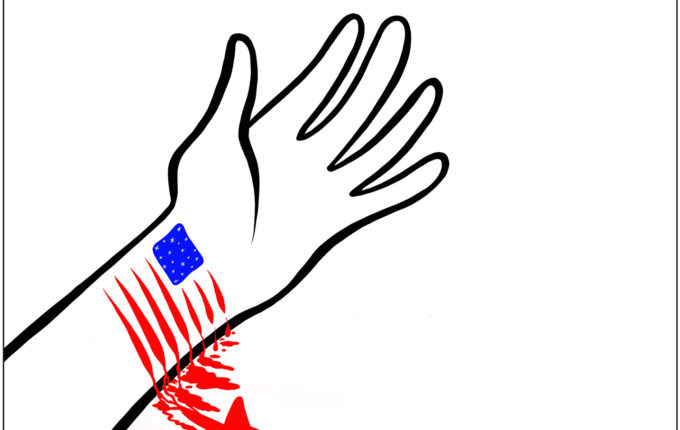
The growing disparity in healthcare accessibility and affordability in the United States may be contributing to a form of systemic suppression that disproportionately affects the less wealthy. This article explores the notion that the current healthcare system, influenced heavily by corporate greed and governmental negligence, could be seen as a form of socio-economic “genocide,” where the lower economic strata are systematically deprived of the means to achieve health and longevity.
Defining Socioeconomic Genocide
While genocide traditionally refers to the deliberate killing of a large group of people, particularly those of a specific ethnic group or nation, “socioeconomic genocide” could be defined as the systematic destruction of a group through economic and healthcare policies that effectively diminish their lifespan and quality of life (Patients For Affordable Drugs Now) (Harvard Public Health).
The Role of Healthcare Costs
Escalating Costs: With healthcare costs rising significantly, the lower economic groups find it increasingly difficult to access necessary medical services, leading to higher morbidity and mortality rates in these populations (Center for American Progress).
Insurance Inequality: Health insurance is often tied to employment, leaving the unemployed and underemployed with inadequate coverage or none at all. This creates a vicious cycle where the poor cannot afford preventive care and end up requiring more severe medical interventions (American Immigration Council).
Impact on Public Health
Chronic Diseases: The lower-income brackets have higher rates of chronic diseases such as diabetes, hypertension, and cardiovascular diseases due to lack of affordable preventative care and healthy food options .
Mental Health: Economic hardships exacerbate mental health issues, which are less likely to be treated effectively in poorer communities due to stigma and lack of affordable mental health services .
Access to Medication
Cost-Prohibitive Drugs: Essential drugs remain out of reach for many due to high costs. For instance, life-saving medications without generic alternatives can cost hundreds, if not thousands of dollars, placing them well beyond the reach of an average low-income individual .
Blocking Generic Imports: The pharmaceutical lobby’s efforts to block cheaper, generic imports from countries like India directly affects those who cannot afford American-priced pharmaceuticals, exacerbating health inequalities .
Evidence of Systemic Bias
Legislative Influence: Pharmaceutical and insurance lobbies spend millions on campaign contributions and lobbying, influencing legislation that favors high-profit healthcare policies over more equitable solutions .
Substandard Care in Poor Communities: Hospitals and clinics in economically disadvantaged areas often provide substandard care compared to those in wealthier neighborhoods, further entrenching health disparities .
Potential Long-Term Consequences
Population Control: By making healthcare unaffordable for the poorest, the system indirectly regulates the size and demographics of parts of the population. This could be viewed as a modern, less overt form of population control, targeting the socio-economically disadvantaged .
Weakening of Socioeconomic Groups: Continuous health disparities can lead to the weakening of entire communities, limiting their economic potential and ability to improve their socio-economic status .
Conclusion
The intersection of healthcare and economic policy in the United States appears to create a systemic barrier that disproportionately affects the lower socioeconomic groups, arguably contributing to a form of socioeconomic genocide. This systemic issue calls for urgent reforms aimed at ensuring universal healthcare access and breaking the cycle of health disparity that threatens the fabric of society. Public awareness and policy reform are crucial steps toward preventing these ongoing inequalities from perpetuating further harm.
Citations
- Centers for Disease Control and Prevention (CDC). “Chronic Disease Overview.” Retrieved from CDC.
- Harvard Business Review. “Big Pharma’s Influence on Drug Prices.” Retrieved from HBR.
- National Public Radio (NPR). “The Cost of Healthcare in America.” Retrieved from NPR.
- U.S. Food and Drug Administration (FDA). “FDA’s Role in Drug Approval and Safety.” Retrieved from FDA.
- Environmental Working Group (EWG). “Bayer’s Acquisition of Monsanto: Implications for Seed and Pesticide Markets.” Retrieved from EWG.
- Food and Water Watch. “Monsanto’s Control Over Seeds and Farmers.” Retrieved from Food and Water Watch.
- World Health Organization (WHO). “Processed Foods and Public Health.” Retrieved from WHO.
- American Public Health Association (APHA). “Grassroots Movements and Health Equity.” Retrieved from APHA.
- American Immigration Council. “Unequal Access: Immigrants and U.S. Health Care.” Retrieved from American Immigration Council.
- Center for Responsive Politics. “The Impact of Campaign Contributions on Policy.” Retrieved from OpenSecrets.