
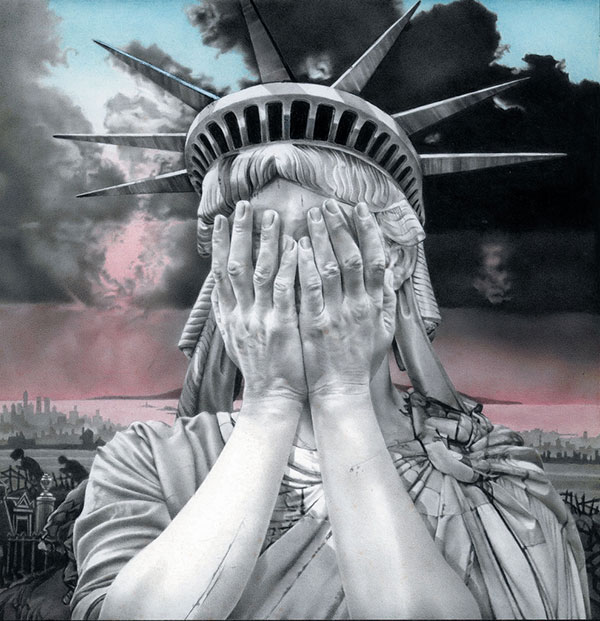
The United States stands on the precipice of a self-engineered downfall, driven by a concoction of high healthcare costs, diminished labor output, escalating living expenses, and a healthcare policy landscape that actively impedes access to affordable care. This trajectory not only challenges the nation’s economic stability but starkly diminishes its global leadership status, paving the way for a future where America is dependent rather than dominant.
The High Cost of Healthcare: A National Burden
America’s healthcare system is notoriously the most expensive in the world, yet it delivers some of the poorest outcomes among developed nations. This system, bloated by administrative overheads, inflated prices of drugs, and exorbitant care costs, drains the financial resources of individuals and the government alike. Instead of fostering a robust society, these high costs cripple the average American’s capacity to save, invest, or simply enjoy a reasonable standard of living. The burden is disproportionately thrown onto younger generations, who face higher taxes to fund unsustainable healthcare programs that benefit an aging population increasingly dependent on medical interventions to prolong life.
Declining Workforce Productivity
The fallout from inadequate health policies is vividly reflected in the declining productivity of American workers. Chronic illnesses, many preventable through better diet and access to basic healthcare, sap the vitality of the labor force. Workers are increasingly absent or underperforming due to health issues, a direct consequence of a diet dominated by cheap, processed foods and a healthcare system that prioritizes profit over prevention. This declining productivity echoes through the economy, resulting in reduced competitiveness on the global stage.
Escalating Cost of Living and Taxation
As healthcare costs balloon, so too do taxes and the overall cost of living, creating a cycle of economic suffocation for the middle and lower classes. The government’s response has often been more about patching the immediate leaks—raising taxes, cutting essential services—rather than overhauling the corroded system beneath. These stopgap solutions do not solve the underlying issues; they merely postpone the inevitable reckoning at the expense of public goodwill and trust.
Societal Shifts and Loss of Community
The traditional American values of community support and familial responsibility have eroded in the face of modern healthcare crises. Elder care, once the domain of the family, has become a corporate affair, with the elderly living longer but increasingly isolated in impersonal care facilities. This shift not only stresses the healthcare system further but also fractures family units, undermining the social fabric that once supported America’s claim to greatness.
The Myth of American Superiority
Beneath the veneer of prosperity, the United States grapples with a profound identity crisis, fueled by its failure to address fundamental healthcare inequities. The myth of American superiority is unraveling, revealing a nation ill-prepared to manage its internal crises or compete on an increasingly aggressive global stage. As healthcare remains inaccessible to many and the quality of life continues to decline, the U.S. risks becoming a dependent entity, leaning on the innovations and resources of other nations that have prioritized the well-being and productivity of their citizens.
Conclusion
The trajectory of the United States, marked by a false sense of superiority and a gluttonous consumption of resources, is unsustainable. The self-destructive cycle of high healthcare costs, low productivity, and poor public policy is a ticking time bomb that threatens to relegate America to the sidelines of global relevance. The nation’s salvation lies in a radical reevaluation and restructuring of its healthcare policies and a renewed commitment to the collective well-being of its populace. Without significant changes, America’s decline is not just probable; it is inevitable.
Citations:
- “Health Care Spending in the United States and Other High-Income Countries.” JAMA, 2018.
- “The American Health Care Paradox: Why Spending More is Getting Us Less.” Elizabeth H. Bradley and Lauren A. Taylor, 2013.
- “The Impact of Chronic Illness on Worker Productivity.” The American Journal of Managed Care, 2010.
- “Obesity and Absenteeism: The Impact on Employers.” Health Affairs, 2005.
- “Healthcare Costs and U.S. Tax Burden.” The Balance, 2021.
- “The Rising Cost of Living in America.” Pew Research Center, 2020.
- “The Transformation of American Family Structure.” Journal of Marriage and Family, 2000.
- “The Impact of Long-Term Care on Family Dynamics.” The Gerontologist, 2011.
- “American Exceptionalism in the Age of Inequality.” American Political Science Review, 2014.
- “Healthcare Inequality in the United States.” The Lancet, 2017.
- “The Price We Pay: What Broke American Health Care—and How to Fix It.” Marty Makary, 2019.
- “Dying of Whiteness: How the Politics of Racial Resentment Is Killing America’s Heartland.” Jonathan M. Metzl, 2019.