
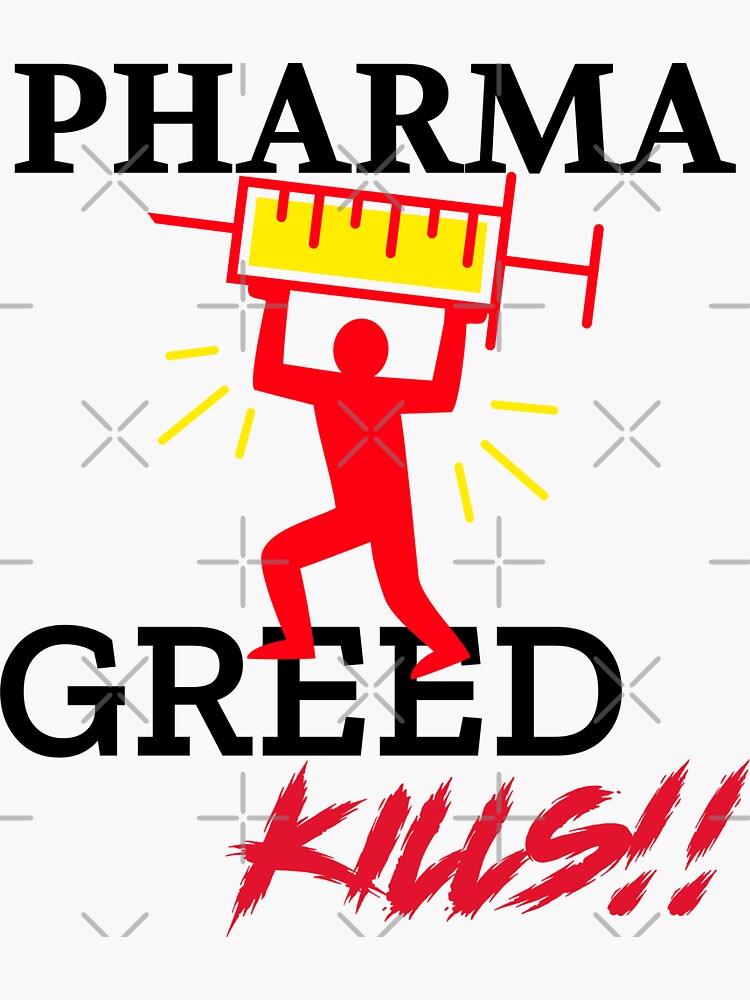
In the landscape of modern healthcare, access to affordable medications is not just a matter of convenience—it’s a fundamental right. Yet, for many Americans, this basic right is under constant threat, stifled by a system that prioritizes profits over people. The infringement of our rights to access WHO-approved pharmaceuticals from India is not just an inconvenience—it’s a violation of our fundamental rights to life, liberty, and the pursuit of happiness.
The Right to Life and Health
At the heart of the matter lies the right to life and health, enshrined in the Universal Declaration of Human Rights and echoed in the principles of the U.S. Constitution. Access to affordable medications is not a luxury—it’s a necessity for maintaining health and well-being. By denying us access to WHO-approved pharmaceuticals from India, the government and its allies in the pharmaceutical industry are effectively placing our lives and health at risk .
The Right to Liberty and Choice
The right to liberty encompasses the freedom to make informed choices about our healthcare. Yet, when our access to affordable medications is restricted, our ability to exercise this freedom is curtailed. By limiting our options to FDA-approved medications, which are often prohibitively expensive, the government is effectively infringing upon our right to choose what is best for our health and well-being .
The Pursuit of Happiness and Financial Stability
The pursuit of happiness is not just about chasing fleeting moments of joy—it’s about striving for a life of fulfillment and contentment. For many Americans, financial stability is a crucial component of this pursuit. Access to affordable medications plays a critical role in achieving this stability, yet the exorbitant prices of FDA-approved medications often force us into financial hardship. By denying us access to cost-effective alternatives from India, the government is effectively undermining our pursuit of happiness and financial security .
Constitutional Violations and Media Control
The government’s overreach in restricting access to WHO-approved pharmaceuticals from India extends beyond mere infringement of our rights—it represents a blatant violation of the U.S. Constitution and Bill of Rights. The suppression of alternative healthcare options not only violates our rights to life, liberty, and the pursuit of happiness but also undermines other constitutional guarantees, such as the right to equal protection under the law and the freedom of speech and expression .
Moreover, the government’s control of the media, including social media platforms like Google, Meta, and others, constitutes a further violation of federal law. By monopolizing the flow of information and silencing dissenting voices, the government and its cronies are engaging in censorship and manipulation—a direct contravention of our rights to free speech and access to information .
Conclusion: A Call to Action
The denial of access to affordable WHO-approved pharmaceuticals from India is not just a healthcare issue—it’s a matter of basic human rights. As Americans, we must stand united in demanding our right to affordable and accessible healthcare. We must hold the government and its allies accountable for their violations of our constitutional rights and fight for a future where healthcare is truly for the people, not the profits of a privileged few. It’s time to reclaim our rights and ensure that no one is left behind in the pursuit of health and happiness.
References
- Universal Declaration of Human Rights, United Nations. Retrieved from https://www.un.org/en/about-us/universal-declaration-of-human-rights
- U.S. Constitution, National Archives. Retrieved from https://www.archives.gov/founding-docs/constitution
- FDA Approved Drug Products, U.S. Food and Drug Administration. Retrieved from https://www.fda.gov/drugs
- High Drug Prices: The Harm to Patients and the Need for a Solution, American Journal of Managed Care. Retrieved from https://www.ajmc.com/view/high-drug-prices-the-harm-to-patients-and-the-need-for-a-solution
- The Rising Cost of Prescription Drugs in the United States, Harvard Medical School. Retrieved from https://hms.harvard.edu/news/rising-cost-prescription-drugs-united-states
- Financial Burden of Healthcare, Centers for Disease Control and Prevention. Retrieved from https://www.cdc.gov/nchs/fastats/health-expenditures.htm
- Equal Protection Clause, Legal Information Institute, Cornell Law School. Retrieved from https://www.law.cornell.edu/wex/equal_protection
- Free Speech and Social Media, American Civil Liberties Union. Retrieved from https://www.aclu.org/issues/free-speech/internet-speech/free-speech-and-social-media
- The Impact of Media on Public Opinion, Pew Research Center. Retrieved from https://www.pewresearch.org
- Censorship and Free Speech, Electronic Frontier Foundation. Retrieved from https://www.eff.org/issues/free-speech